hunted by fpv drones
 growing · 2¢
We should not forget that our mission is to kill and be killed. We should never close our eyes to that fact. Making war by killing without being killed is a chimera; making war by being killed without killing is inept. So one must know how to kill, while being ready to die oneself. A man who is committed to death is terrible.” - Carl von Clausewitz
This is inspired by the recent happenings regarding Iran, and Gregoire Chamayou’s A Theory of the Drone. 1https://www.jstor.org/stable/jj.26193307
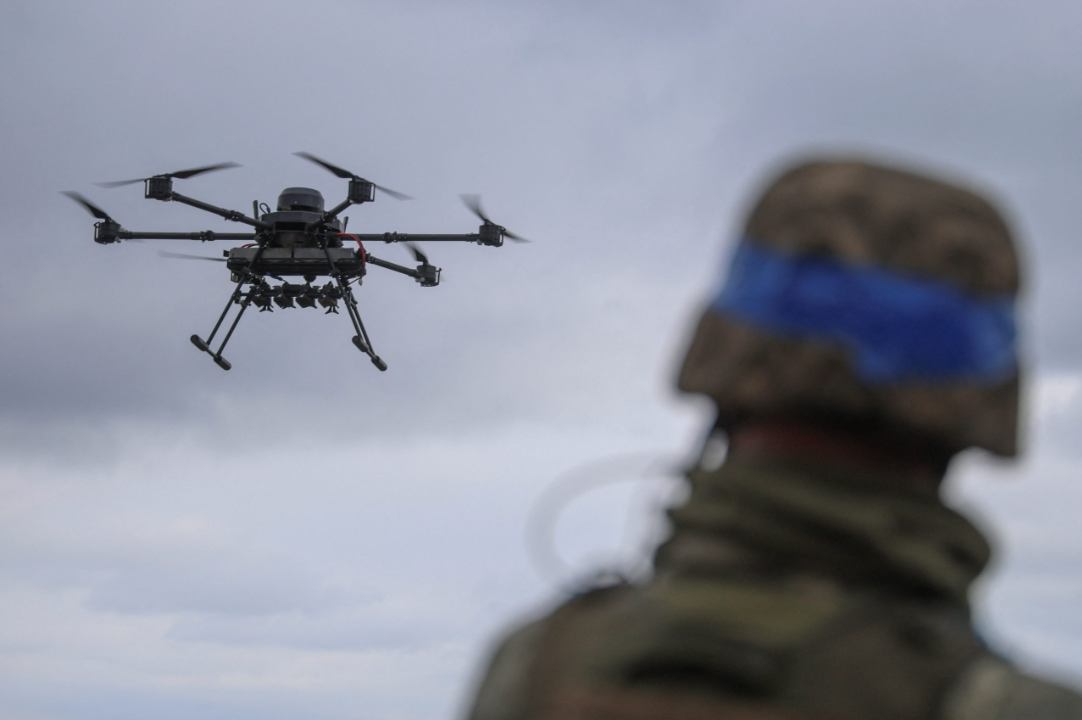
A drone, per the U.S. Army vocabulary, is defined as “a land, sea, or air vehicle that is remotely or automatically controlled.”
It’s worrisome to me how important it has become in the U.S.’s current war with Iran, with the Shahed ‘kamikaze’ drones. These drones are expendable at only $20,000 a pop, and Iran has been launching hundreds of these to attack the air defense of the United States and Israel in the Middle East. Our interceptors (US Patriot PAC-3, THAAD) cost $4-15 million per shot. They are also hard to build, with only 600 Patriot interceptor being produced a year. Iran is holding its own in the war in a monetary holdout game. However, what alarms me is what this means for the future of warfare.
War has historically been an intimate affair. To kill someone, you generally risk being close enough to someone to be killed yourself. Even with long-range artillery or air-bombs, the attacker’s life is at risk. There is a symmetry in the shared mortal risk in both sides, the fear inside one’s mind reflected in the enemy’s eyes. For most, the battlefield is the first place of interaction between people from antagonistic groups. Their hostility for each other is not founded in personal experience, but from hegemony. Despite all the government propaganda instilled in each’s belief of the other, the battlefield brings out moments of recognition that we are not all that different from one another. This unique intimacy—understanding another’s primal fear, their vulnerability—is reserved for dire circumstances that are scarce replicated outside of war.
It also saves lives: Christmas War Truce, Screaming Eagles
Drone warfare holds none of this same intimacy.
In 2004, there was a website called Live-Shot.com that allowed Internet users to hunt—virtually. With a camera fixed to a mobile, remote controlled device, one could shoot live animals let loose on a ranch in Texas from their bedroom at home. This triggered opposition from so many that even the NRA expressed its disapproval, with a Houston police officer stating, “t’s not hunting. It’s killing… . Someone gets a computer and pushes a button and something dies for no reason.” In the end, hunting online was forbidden.
“In the competition between two enemy combatants,” wrote Crawford, “the goal is to win the battle by defeating the adversary: both combatants must confront to win. However, a manhunt scenario differs in that each player’s strategy is different. The fugitive always wants to avoid capture; the pursuer must confront to win, whereas the fugitive must evade to win.” The battlefield is no longer combat of man-man, but rather of predatory-prey. In Ukraine, drones have taken over as the leading weapon for casualties 2https://ukraine.ohchr.org/en/2025-deadliest-year-for-civilians-in-Ukraine-since-2022-UN-human-rights-monitors-find.
The psychological impact of drone warfare is also incredibly sad. WIP: PTSD from Drone Warfare, Dronephobia
There’s merit in arguments where drones is better for social good; if technology can sort out all our conflict for us, then humans don’t have to deal with the dirty mess. Although this is true, the human cost of life has historically been (or should be) the biggest force limiting the amount of world conflict. The cost of initiating a war, in terms of lives lost, the economy, irreparable damage—was a lot for any nation to take on. The current expendability of machinery, cheap, bloodless (for the aggressor), and scalable removes the friction, and (I believe) will make war, if you can even call it that, much more likely.