i who have never known men by jacqueline harpman
 growing · 2¢
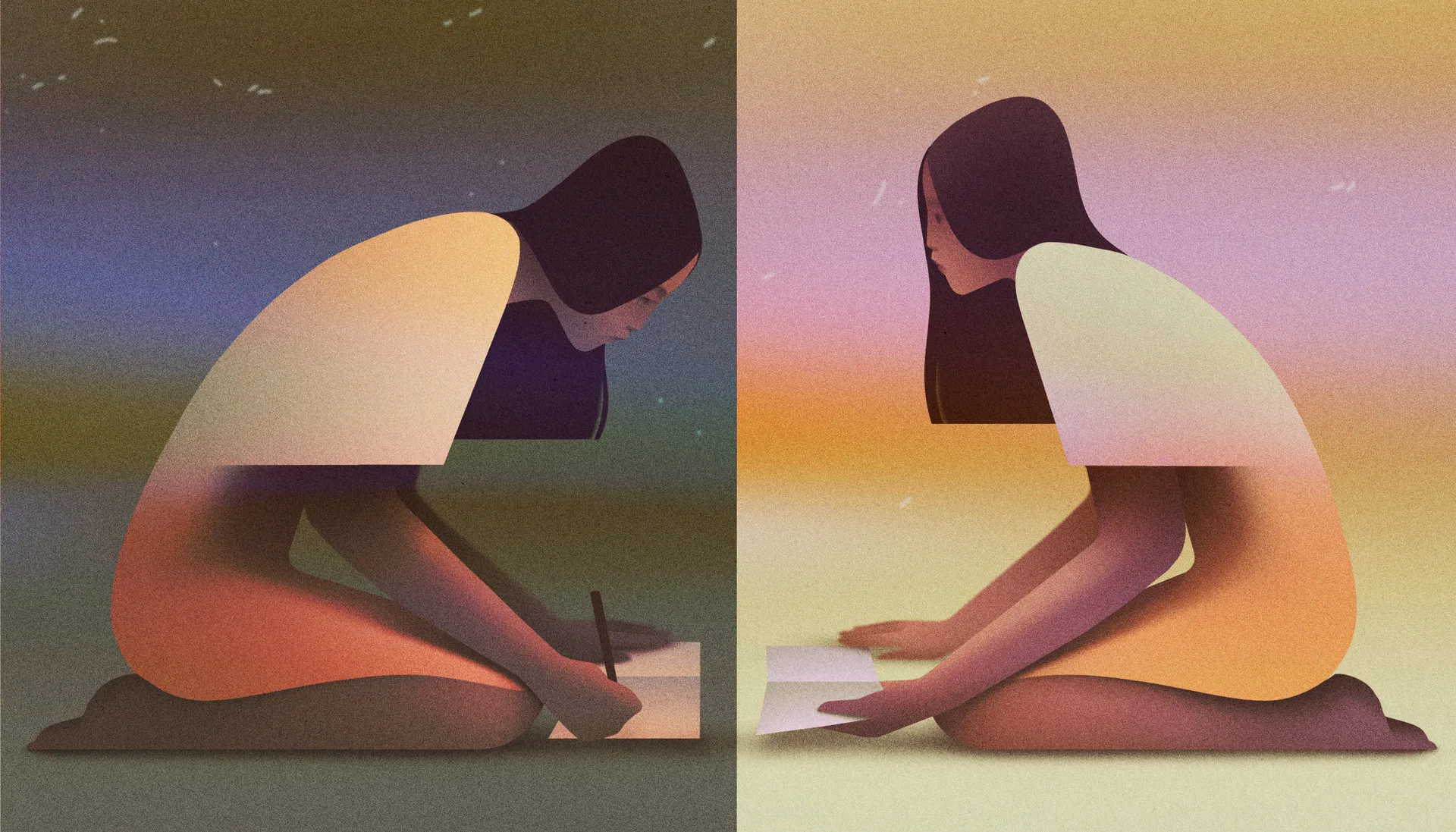
1Art by Sophie Gullbrants
Recently I’ve been really into reading shorter novels, under 200 or so pages. There’s something refreshing about the transient amount of time it takes to read it, similar to watching a shorter film. I can read a short story trusting that there won’t be much fluff or dullness, and can finish them in a couple of days without staying up too late or wasting a whole day away. There isn’t the immersive worldbuilding of longer fiction, and I like that they naturally focus more on alternate visions of our own universe—someone on Twitter said they enjoyed books where the characters were realistic but in odd or unusual circumstances, and I think that sums up me feeling pretty well.
In the novel, 39 women and a girl are held prisoner in a cage underground with only male guards. Everyone else has memories of the outside world, but the girl was too young to remember anything but the bunker. They don’t know why they are there, and are suddenly released one day when a siren sounds and the guards flee, accidentally letting the prisoners escape behind them. The prisoners come out to a barren plain with no hints at civilization as far as they can see. The women travel as a community to try and find what happened, but they only come across endless bunkers, all the same and with no guards and no other bunkers with the fortune of letting their prisoners escape, all housing forty corpses, of sometimes men and sometimes women. Although the women question what happened to the world, and why there are seemingly infinite stores of meat in each bunker, no signs of any guards anywhere, and a peculiar landscape that seems un-Earthly, they travel for years with little answers and reason for joy. They slowly die off of old age, and only the girl, the narrator, is left eventually. This is her memoir, and she, too, dies at the end without resolving her main questions.
Sorry for the probably terrible summary, I’m trying to get better about it. This book was also awful, in the best sense of the word. The narrator is never given a name, even though the other 39 women are given one. She is instead referred to as “the child,” which is fitting because she has a child’s innate curiosity and has a refreshing vibrancy throughout the book that is quite inspiring. After the passing of her last companion, the only sense of joy that she derives is from learning and creating novelty—figuring out how to spell words she’s never seen, coming up with a new theory about her world, or discovering how the bunkers are spaced out, for example. Her thrill at having new ideas to play with (e.g. her rereading a gardening book cover-to-cover multiple times, measuring time by counting her heartbeats and comparing it to the 24-hour schedule of Earth), or even a new thought, makes me feel appreciation for being in school and curiosity.
The novel is awful in a good way:
The book’s ending is unfulfilling. The girl never finds out the answers to her questions, and continues uncovering more theories up until her very own death, where she writes this memoir. There is no closure around why they were in the bunker, what the alarm was for, and where everyone went. It is vaguely uncomfortable and it left me with a sense of disappointment—which is, of course, Harpman’s goal. It stood out to me that the girl retains a spark of hope throughout the book. Her spirit is never defeated, and it’s wholesome and heartwarming to read. It thus makes the book’s bleak themes feel a lot lighter, particularly because the narrator doesn’t seem to find it so dire herself.
It studies the questions: what does mankind look like when stripped to its core, raised without external influences? Can someone be human if they’ve never been touched or loved, understood or remembered?
Despite this, the novel is also freeing. There is no grand purpose in life, and all we really have are the small moments. I used to feel guilty about being able to enjoy small moments (sitting on the grass, eating good food), when there is so much going on in the world, and people are dying in a war started by the person leading my country. But who are we to enjoy life without the little pleasures? if we can’t enjoy the simple things, what would be the point of having a world where everyone lives an easy life, in a utopia, where no problems need to be solved anymore? at that point, only useless pleasures mean anything, and is what we should appreciate now as well. Life is absurd, and when society is stripped away the absurdity becomes more clear.